
OUR IMPACT
At the Y WA, flourishing begins the moment children and young people walk through our doors. This section shares the measurable results and real-life stories behind those beginnings, and how they grow into meaningful, lasting change. Flourishing guides how we make decisions, where we invest our resources and the culture we build every day, so it is the starting point of everything we do, not an afterthought. We invite our partners, funders, staff and community to join us in championing innovative, evidence-driven approaches, because every child and young person deserves a place where flourishing begins.


Advancing Our Impact Strategy
As we prepare for the next chapter of Y WA’s journey in 2025-26, our focus remained clear: creating the conditions for children, young people and families to flourish.
Across our services, we continued to embed our Human Flourishing Model, which recognises that people flourish when they experience belonging, competence, independence and connection. We are driven to support our children and young people of WA through by 3 core mechanisms that underpin our everything we do, from our approaches and messaging to our events, programs and facilities.
The first is fostering positive, sustained relationships. Whether between children and educators, young people and youth workers, or families and community staff, our approach to building trusted relationships is the foundation for growth, resilience and belonging.
The second is providing evidence-informed opportunities to build skills and capability. Through intentional learning experiences, we help participants develop the confidence, competence and independence needed to navigate life’s challenges and opportunities.
The third is creating opportunities to contribute. By empowering people to participate, lead and connect, we strengthen their sense of purpose, amplify their voice and deepen their connection to community.
In Our Impact, we share the data, outcomes and stories that bring this framework to life.
Highlights
- 241,788 Children Attendances
- 46% of School ReadY children show significant improvement in oral language skills
- 41,210 Young People Participation
- 47.09 net improvement in Positive Youth Development scores in Case Management participants
- 340,548 community participations
- 76 positive feedback collected from community service and recreation centre participants.
Children
Our children’s services continued to provide safe, nurturing environments where children learn, play and build the foundations for lifelong success. Across our 14 Early Learning Centres (ELCs) and 16 Out of School Hours Care (OSHC) services, we recorded 241,788 attendances, highlighting the vital role these services play during the most important years of a child’s development.
Strong relationships remain at the heart of our approach. Feedback from 300 parents and carers demonstrated high confidence in our educators, with 91% reporting their child had developed positive relationships with staff and 89% seeing meaningful developmental progress. Nearly 2/3 of families said they were very likely to recommend our ELCs to others.
Early support for children has never been more important, with too many children starting school without the foundational skills they need to flourish. WA’s School ReadY Language and Literacy programme helps children aged 3 to 5 develop the essential skills that set them up for success at school and in life.
Our program’s strong outcomes led to its expansion to 23 early learning centres nationally, including partnerships with Catholic Education Canberra Goulburn, Y Canberra and Y Whittlesea. Through evidence-informed, play-based learning, School ReadY places a strong emphasis on language and literacy development, one of the most significant predictors of future educational achievement.
Assessment data from participating children aged 3 years and older showed that 46% demonstrated significant improvement in oral language development. By strengthening children’s ability to communicate, understand, express themselves and connect with others, School ReadY is changing trajectories of vulnerable children and building the skills and confidence they need to read, learn and flourish.




Young People
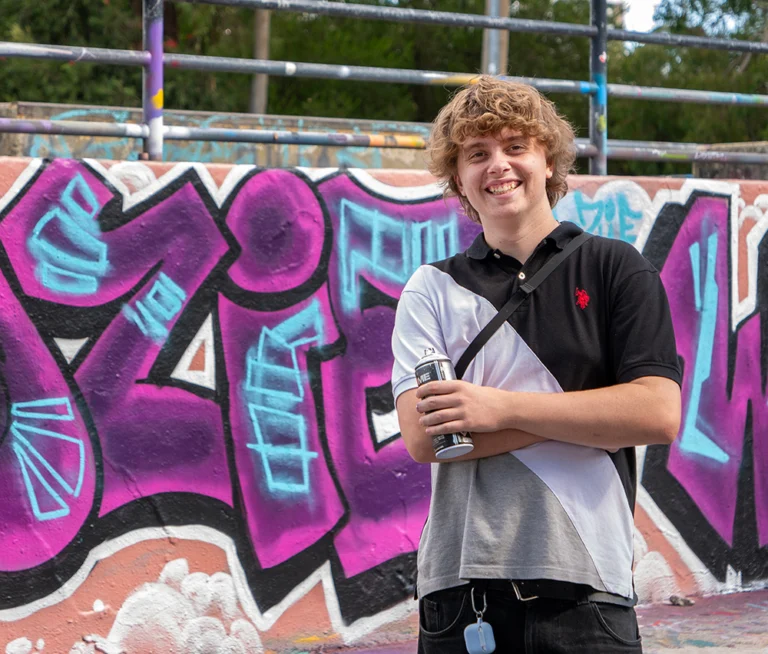
Through our youth centres, case management services, Youth Parliament and Y Schools, we supported 6,534 young people, recording 41,210 participations across metropolitan and regional Western Australia. Behind every number is a young person who was seen, supported and empowered to flourish through their connection with the Y. Together, these moments of support helped young people build confidence, strengthen their wellbeing and create pathways to a brighter future.
Our young people continued to feel safe, welcomed and supported in our metropolitan youth centres. More than 90% of our participants reported feeling a sense of belonging and respect, while over 80% increased their awareness of the opportunities and supports available to them. More than 70% reported improved confidence in communication, stronger goal-setting skills and enhanced wellbeing, demonstrating the positive impact of meaningful connections and support
Young people engaged in case management services reported incredibly strong outcomes. All participants said they had trusting relationships with their case workers, while long-term measurement showed a net improvement of 47.09 points in Positive Youth Development scores, reflecting growth across key indicators of flourishing.
Recent policy discussions, research and media commentary have highlighted concerns about declining civic knowledge and participation among young people. Our National Youth Parliament program challenges this narrative by empowering young people to engage in civic life, develop leadership skills and become confident advocates for change.
In its 30th year, National Youth Parliament continued to foster leadership, advocacy and civic participation. Among participants, 90% reported access to positive role models, 89% felt confident applying what they had learned, and 59% believed their voice had a meaningful impact in their community.
National school attendance rates have fallen to a 10-year low, and more than 2 in 10 young people are not progressing through to Year 12. Education is the foundation for a brighter future, which is why we continue to champion our Y School campuses as the leaders in supportive education and pathways.
Y School provides a safe and structured environment where young people can re-engage with learning and complete their studies. We celebrate every student who walks through our doors, recognising that progress looks different for everyone. Our flexible, personalised approach meets young people where they are and supports them to move forward with confidence.
This year, our senior Y School campus supported 183 students, while our newly established junior campus provided tailored support to a further 41 young people. Feedback highlighted the strength of this approach, with 86% of senior campus students reporting that support was available when they needed it and 95% of parents describing staff as highly approachable.
Our educators know there is no single pathway to success. We help young people build confidence, achieve their goals and create positive pathways for the future.




Families & Communities
In Boronia, Newman and across the Pilbara, families found places to belong, children built confidence, and communities grew stronger through meaningful connections and shared experiences. Across our family and community services, we created opportunities for families to come together, engage with their communities and support their children’s development. Through Play in the Park, the South Hedland Child and Parent Centre, Boronia Playgroup, and the Pakala Jijikaja Yankuni-la! School Engagement Program, we recorded 10,916 participations during the year.
Our recreation centres in Kalgoorlie and Serpentine Jarrahdale also played a vital role as community hubs, welcoming 329,632 participations and bringing together children, families, young people and older adults.
This year marked the introduction of consistent community impact measurement across our family services. Feedback highlighted the important role that our programs play in reducing isolation, building confidence and supporting children’s learning and development. Families consistently identified friendship, connection and access to resources as the most valuable outcomes of participating with the Y WA.
Similar themes emerged across our recreation centres. Feedback from 65 members of the Serpentine Jarrahdale Recreation Centre underscored the importance of belonging, wellbeing and community connection, with many describing the centre as a place where they felt welcomed, recognised and supported. Whether through family services, playgroups or recreation centres, we continue to strengthen the social connections that help individuals, families and communities flourish.
Highlights
- Community participation at the South Hedland Child and Parent Centre more than doubled
- Friendship, connection and children’s learning opportunities identified as key areas of value by families.


Our People


Learn More
Our Highlights
This year was full of beginnings worth celebrating. We received national recognition at the 2025 Y Australia Awards and marked 30 years of Youth Parliament, a milestone for youth voice in WA. In Newman, our Education Engagement and Attainment Initiative, Pakala Jijikaja Yankuni-la! ("Get up young people, let's go!"), won the Kooya Local Engagement Excellence Award at the AIM WA Pinnacle Awards. Our new Y School 7 - 9 Campus welcomed younger students. Here are some of the moments where flourishing began.
Read more
Our Leaders
2025–26 marked the fourth year of our Growth for Impact Strategy, and our ambition has stayed clear: creating the conditions for children, young people and communities to flourish. Every day, we see that purpose brought to life by our people. In early learning centres, youth centres, recreation facilities, classrooms and community programs, our staff create places where children and young people feel safe, valued, supported and empowered. That is where flourishing begins.
Read more
Our Stories
We have many stories to share but for this year we are focusing on stories that illustrate 'Where flourishing begins'. Where Flourishing Begins tells the story of a year of foundations. Across our services, the Y WA laid the groundwork for every child and young person to flourish, through the beginnings, first steps and quiet moments where change takes root.
Read more